


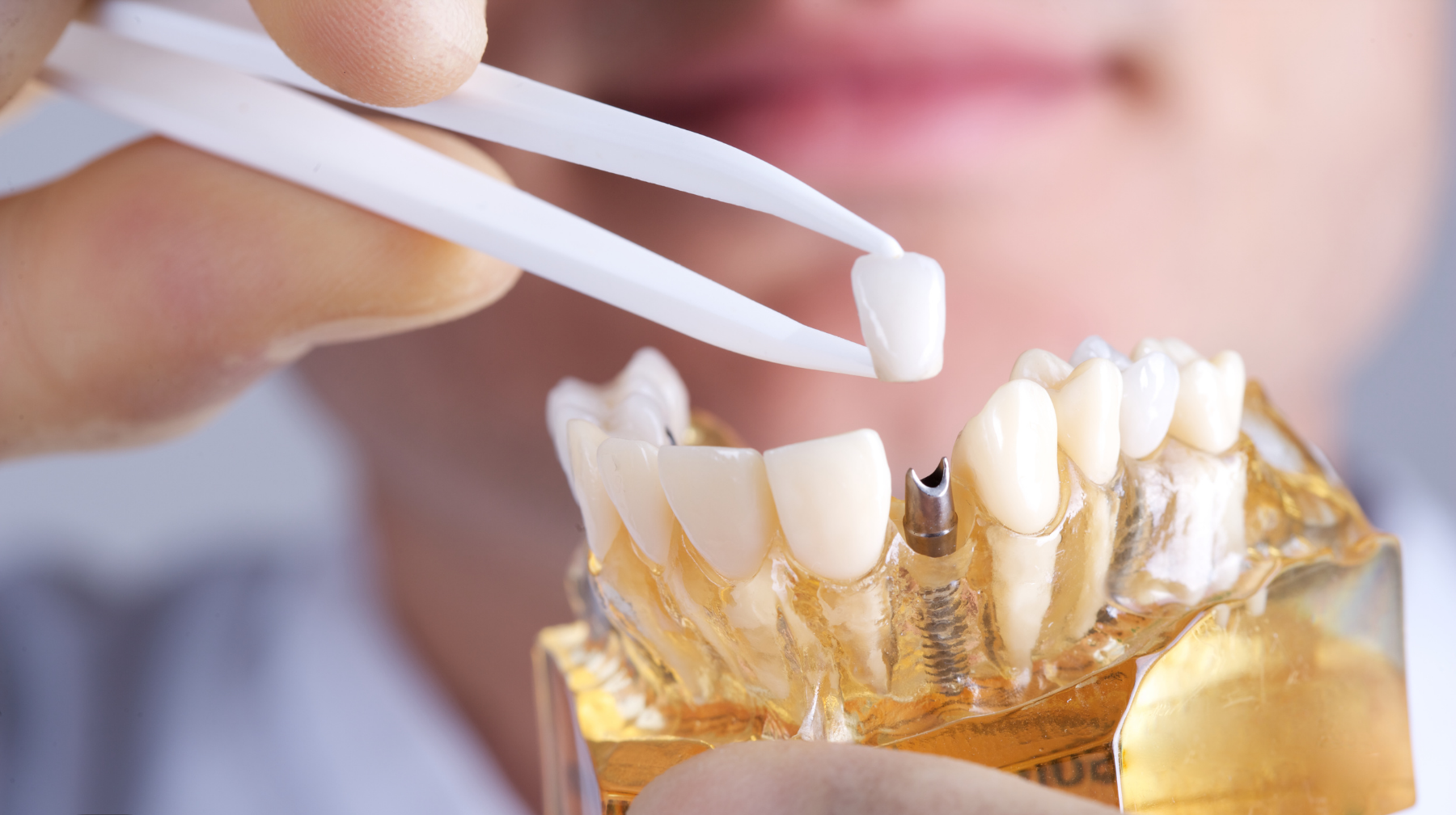
Implant
Implants are artificial tooth roots made of biocompatible materials such as titanium and surgically placed in the jawbone. They effectively replace missing teeth by providing a solid foundation for crowns, bridges, or dentures.
Beyond their aesthetic appeal, implants are vital for maintaining oral health. When you lose a tooth, the jawbone structure can deteriorate, leading to facial sagging and other complications. Implants help prevent bone loss and maintain the structural integrity of the face. Furthermore, they restore the function of the missing tooth, allowing you to eat, speak, and smile with confidence.
Advantages of Implants
Implants offer many advantages over other tooth restoration options:
Improve aesthetic appearance and self-confidence: Implants significantly enhance your smile and self-confidence. They blend perfectly with your natural teeth and provide a natural appearance.
Restores chewing and speaking function: Implants provide a natural feel and function, allowing you to eat and speak comfortably without the restrictions associated with other types of dentures.
Preserves jawbone density: Unlike traditional dentures, implants help preserve jawbone density. Implants are vital for preventing facial sagging and bone loss, which can occur without teeth.
Durable and Long-Lasting: Implants are designed to last. If properly cared for, they can last a lifetime. This makes implants a long-term investment in oral health.
Suitable for Implants
Implants have revolutionized dentistry by offering a durable and aesthetically pleasing solution for missing teeth. However, not everyone is suitable for implants. Factors affecting suitability include:
Oral Health: Good oral health is crucial for successful implant treatment. Patients with gum disease or other oral health problems should have these conditions treated before receiving implants.
Jawbone density: You must have sufficient bone density to support implants. In some cases, bone grafting may be necessary to increase bone density before implant placement.
General health status: Systemic conditions or certain medications may affect eligibility. For example, patients with uncontrolled diabetes or blood clotting disorders may require additional testing.
Daily habits: Smoking and excessive alcohol consumption can reduce the likelihood of successful implant treatment. These habits negatively impact healing and increase the risk of infection.
Factors Affecting Suitability
Various factors are considered to determine your suitability for implants:
Age: While there is no age limit for implants, younger patients may be at higher risk of complications.
Dental health history: Patients with a history of tooth decay, gum disease, or jaw fractures may be affected by eligibility.
Medication use: Certain medications can negatively impact the healing process.
Bite and Jaw Alignment: Misaligned teeth or jawbones may require additional treatment before implant surgery.
Special Considerations
Smokers: Smoking significantly increases the risk of implant failure and complications. We strongly recommend quitting smoking before undergoing implant surgery.
People with Chronic Health Conditions: Patients with conditions such as diabetes, heart disease, or osteoporosis will require additional testing and possibly specialized care.
Children and Adolescents: Implants are generally not recommended for children. However, exceptions may be made in cases of severe tooth loss or facial trauma.
Beyond their aesthetic appeal, implants are vital for maintaining oral health. When you lose a tooth, the jawbone structure can deteriorate, leading to facial sagging and other complications. Implants help prevent bone loss and maintain the structural integrity of the face. Furthermore, they restore the function of the missing tooth, allowing you to eat, speak, and smile with confidence.
Advantages of Implants
Implants offer many advantages over other tooth restoration options:
Improve aesthetic appearance and self-confidence: Implants significantly enhance your smile and self-confidence. They blend perfectly with your natural teeth and provide a natural appearance.
Restores chewing and speaking function: Implants provide a natural feel and function, allowing you to eat and speak comfortably without the restrictions associated with other types of dentures.
Preserves jawbone density: Unlike traditional dentures, implants help preserve jawbone density. Implants are vital for preventing facial sagging and bone loss, which can occur without teeth.
Durable and Long-Lasting: Implants are designed to last. If properly cared for, they can last a lifetime. This makes implants a long-term investment in oral health.
Suitable for Implants
Implants have revolutionized dentistry by offering a durable and aesthetically pleasing solution for missing teeth. However, not everyone is suitable for implants. Factors affecting suitability include:
Oral Health: Good oral health is crucial for successful implant treatment. Patients with gum disease or other oral health problems should have these conditions treated before receiving implants.
Jawbone density: You must have sufficient bone density to support implants. In some cases, bone grafting may be necessary to increase bone density before implant placement.
General health status: Systemic conditions or certain medications may affect eligibility. For example, patients with uncontrolled diabetes or blood clotting disorders may require additional testing.
Daily habits: Smoking and excessive alcohol consumption can reduce the likelihood of successful implant treatment. These habits negatively impact healing and increase the risk of infection.
Factors Affecting Suitability
Various factors are considered to determine your suitability for implants:
Age: While there is no age limit for implants, younger patients may be at higher risk of complications.
Dental health history: Patients with a history of tooth decay, gum disease, or jaw fractures may be affected by eligibility.
Medication use: Certain medications can negatively impact the healing process.
Bite and Jaw Alignment: Misaligned teeth or jawbones may require additional treatment before implant surgery.
Special Considerations
Smokers: Smoking significantly increases the risk of implant failure and complications. We strongly recommend quitting smoking before undergoing implant surgery.
People with Chronic Health Conditions: Patients with conditions such as diabetes, heart disease, or osteoporosis will require additional testing and possibly specialized care.
Children and Adolescents: Implants are generally not recommended for children. However, exceptions may be made in cases of severe tooth loss or facial trauma.